IPTV vs OTT Streaming: What Is the Difference?
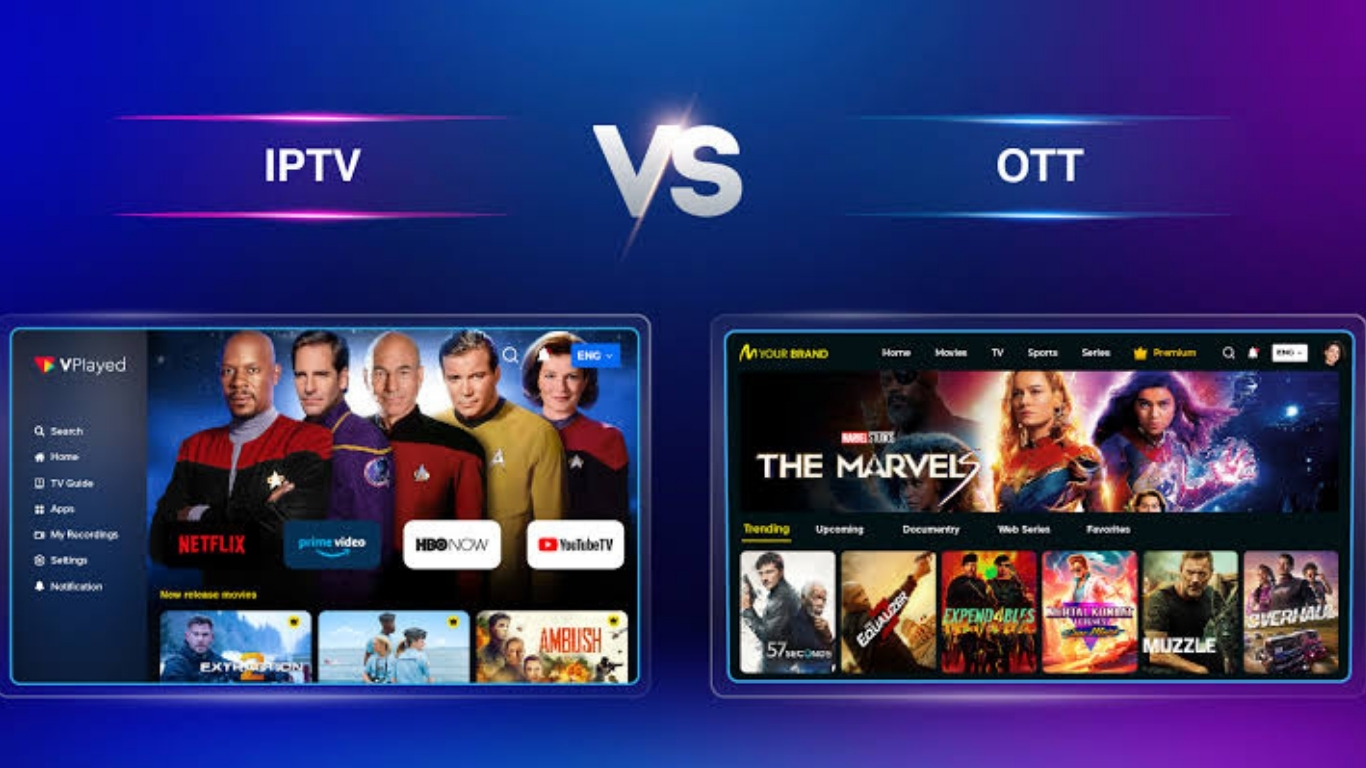
Television viewing has changed significantly with the growth of internet-based entertainment. Instead of depending only on traditional broadcast signals, viewers can now watch live television, films, series, and other content through internet-connected devices. Two important technologies behind this change are IPTV and OTT streaming.
Although IPTV and OTT streaming both deliver video through internet protocol networks, they are not exactly the same. They differ in how content is delivered, how networks are managed, what devices can be used, and how viewers access television programming.
Understanding
IPTV vs OTT streaming can help you make better decisions about your home entertainment setup. Whether you enjoy live television, on-demand content, or flexible viewing across multiple devices, knowing the differences between these technologies is useful.
This guide explains IPTV and OTT streaming in detail, including how they work, their advantages and disadvantages, video quality, costs, internet requirements, security, and the factors to consider when choosing between them.
What Is IPTV?
IPTV stands for Internet Protocol Television. It is a technology that delivers television content through IP-based networks instead of traditional terrestrial, satellite, or cable broadcasting.
IPTV can support live television channels, video on demand, catch-up programming, and interactive television features. Depending on the service, IPTV may operate through a managed network or another type of internet protocol connection.
The main idea behind IPTV is that television content is delivered using digital network technology.
How Does IPTV Work?
IPTV generally involves several stages:
- Television content is received from broadcasters or content owners.
- The content is encoded into a digital video format.
- Video is transmitted through an IP network.
- A compatible application or device receives the stream.
- The content is decoded and displayed on a television or another screen.
IPTV can be accessed through Smart TVs, dedicated television boxes, computers, tablets, and smartphones where supported.
Types of IPTV
IPTV services commonly include several forms of television delivery.
Live IPTV
Live IPTV delivers television channels in real time. Viewers watch programming according to a broadcast schedule.
Video on Demand
Video on demand allows viewers to select and watch available programmes whenever they choose.
Catch-Up TV
Catch-up television allows viewers to watch selected programmes after their original broadcast.
Time-Shifted Television
Time-shifted viewing may allow viewers to pause, rewind, or replay television content, depending on the service.
What Is OTT Streaming?
OTT stands for Over-the-Top. OTT streaming refers to the delivery of video content over the internet without requiring a traditional television distribution network such as cable or satellite.
OTT services can deliver films, television series, documentaries, live events, and other digital content through internet-connected devices.
The term “over-the-top” describes the fact that content is delivered over an existing internet connection rather than through a traditional television distribution system.
How Does OTT Streaming Work?
OTT streaming typically works through the following process:
- Content is stored or processed on digital servers.
- Video is encoded into streaming formats.
- The content is delivered over the internet.
- A compatible application or web browser requests the video.
- The video is streamed to the viewer’s device.
OTT platforms commonly use adaptive bitrate streaming, which adjusts video quality according to available bandwidth and device performance.
Types of OTT Streaming
OTT streaming can include several types of content.
On-Demand Video
Viewers choose films, series, documentaries, and other programmes from an available library.
Live Streaming
Some OTT platforms deliver live television channels, concerts, sports, news, and other events.
Free and Ad-Supported Streaming
Some services provide access to content supported by advertising.
Subscription-Based Streaming
Some services operate through recurring subscriptions that provide access to selected content.
The availability of each model depends on the service and its content licensing arrangements.
IPTV vs OTT Streaming: Main Differences
The main difference between IPTV and OTT streaming is the way the service is delivered and managed.
IPTV traditionally refers to television delivery through IP networks, often with a focus on managed television services. OTT streaming generally refers to internet-delivered content accessed through an existing broadband connection, often through applications or websites.
However, the terms can overlap. Some IPTV services use ordinary internet connections, and some OTT services provide live television channels.
| Feature | IPTV | OTT Streaming |
| Full name | Internet Protocol Television | Over-the-Top Streaming |
| Delivery | IP-based network | Internet connection |
| Network management | May use a managed network | Usually uses the public internet |
| Live television | Common | Available on some platforms |
| On-demand content | Often available | Common |
| Devices | TVs, boxes, computers, mobiles | TVs, boxes, computers, mobiles |
| Internet dependency | Depends on the network | Usually requires internet |
| Video quality | Depends on service and network | Depends on service and network |
| Viewing flexibility | Depends on platform | Often highly flexible |
| Content access | Depends on authorization and package | Depends on licensing and availability |
The distinction is not always absolute. The exact features depend on the technology and service being used.
IPTV vs OTT: Network Delivery
Network delivery is one of the most important technical differences.
IPTV Network Delivery
Traditional managed IPTV systems may use a controlled network designed to deliver television content efficiently. Network operators can sometimes manage traffic, quality of service, and delivery performance.
This can be useful for live television and services that require consistent playback.
However, not all IPTV systems use managed networks. Some operate through ordinary internet connections.
OTT Network Delivery
OTT streaming usually relies on the public internet. Content is delivered through internet infrastructure, often using content delivery networks to distribute video efficiently.
The viewer’s experience may depend on:
- Internet speed
- Network congestion
- Distance to servers
- Wi-Fi performance
- Streaming bitrate
- Device compatibility
Which Has Better Network Performance?
Managed IPTV may offer more predictable delivery where the network is designed for television traffic.
OTT streaming can also provide excellent performance when the internet connection and content delivery infrastructure are reliable.
Neither technology guarantees better performance in every situation.
IPTV vs OTT Streaming: Video Quality
Both IPTV and OTT streaming can support high-quality video.
Available resolutions may include:
- Standard Definition
- High Definition
- Full HD
- 4K Ultra HD
- HDR video where supported
IPTV Picture Quality
IPTV picture quality depends on the video source, network conditions, compression, and compatible equipment.
A stable network can help deliver smooth playback and consistent resolution.
OTT Picture Quality
OTT streaming commonly uses adaptive bitrate technology. This allows the stream to adjust its quality according to network conditions.
For example, if bandwidth decreases, the video may temporarily switch to a lower resolution to reduce buffering.
Which Has Better Picture Quality?
There is no universal winner.
A high-quality IPTV service and a high-quality OTT service can both provide excellent video. The content source, bitrate, device, and connection are more important than the label IPTV or OTT alone.
IPTV vs OTT Streaming: Internet Requirements
Internet performance plays a major role in both technologies.
IPTV Internet Requirements
IPTV bandwidth requirements vary depending on the video resolution and network design.
Approximate bandwidth guidelines include:
| Video Quality | Typical Bandwidth |
| SD | Around 3–5 Mbps |
| HD | Around 5–10 Mbps |
| Full HD | Around 10–15 Mbps |
| 4K | Around 20–25 Mbps or more |
These are general estimates. Actual requirements vary by codec, bitrate, platform, and network conditions.
OTT Internet Requirements
OTT streaming also depends on available bandwidth.
The required speed depends on:
- Video resolution
- Compression technology
- Number of devices streaming
- Network congestion
- Application performance
A household watching several high-resolution streams at once may need more bandwidth than a household watching one standard-definition programme.
Which Is Better for Slow Internet?
Both IPTV and OTT can experience buffering when the internet connection is poor.
Some managed IPTV systems may offer advantages in network-controlled environments. OTT streaming applications may adapt video quality to changing network conditions.
A reliable broadband connection is important for both.
IPTV vs OTT Streaming: Live Television
Live television is an important feature for many viewers.
IPTV Live TV
IPTV is often associated with live television channels and scheduled programming.
A compatible IPTV platform may provide:
- Live channel browsing
- Electronic programme guides
- Programme schedules
- Catch-up viewing
- Recording features where supported
OTT Live TV
OTT streaming can also deliver live television, including news, entertainment, sports, and special events.
However, not every OTT platform offers live channels. Some focus mainly on on-demand content.
Which Is Better for Live TV?
IPTV may be a natural choice for viewers who prioritize live television.
OTT can also be suitable for live viewing when the chosen service supports the required channels and content.
The most important factor is the availability of the programming you want to watch.
IPTV vs OTT Streaming: On-Demand Content
On-demand content allows viewers to choose programmes instead of following a fixed schedule.
IPTV On-Demand
Many IPTV systems offer video-on-demand libraries and catch-up features.
The availability of content depends on the service and its licensing agreements.
OTT On-Demand
On-demand viewing is one of the defining features of many OTT streaming platforms.
Viewers can browse content libraries, search for programmes, and watch selected titles when convenient.
Which Offers Better On-Demand Viewing?
OTT streaming is often designed around on-demand discovery and playback.
IPTV can also provide strong on-demand features, especially when the service includes a well-organized content library.
The best option depends on the available content, interface, and viewing habits.
IPTV vs OTT Streaming: Device Compatibility
Both technologies can support multiple devices.
IPTV Devices
IPTV may be accessed through:
- Smart TVs
- Dedicated IPTV boxes
- Computers
- Smartphones
- Tablets
- Compatible media players
The available devices depend on the service and application.
OTT Devices
OTT streaming commonly supports:
- Smart TVs
- Streaming devices
- Mobile phones
- Tablets
- Computers
- Web browsers
Many OTT applications are designed for easy access across different screens.
Which Is Better for Multi-Device Viewing?
OTT streaming often provides a flexible multi-device experience.
IPTV can also support multiple devices, depending on the service and subscription terms.
Users should check compatibility before choosing a platform.
IPTV vs OTT Streaming: Cost Comparison
The cost of IPTV and OTT streaming depends on the service, equipment, and additional features.
IPTV Costs
IPTV-related costs may include:
- Monthly subscription
- Broadband internet
- Compatible device
- Installation
- Recording features
- Additional television packages
Some managed IPTV services may bundle television and internet connectivity.
OTT Costs
OTT streaming costs may include:
- Subscription fees
- Internet connection
- Compatible device
- Optional premium content
- Advertising-supported or free viewing models
Some services offer monthly, annual, or other subscription options.
Which Is More Affordable?
There is no universal answer.
The best way to compare costs is to calculate the total monthly expense, including internet, equipment, subscriptions, and any additional charges.
A lower subscription price does not necessarily mean better value if it offers less of the content you want.
IPTV vs OTT Streaming: User Experience
The user interface can significantly affect how enjoyable a television service is.
IPTV User Experience
IPTV interfaces may focus on live channels, electronic programme guides, and traditional television browsing.
Features may include:
- Channel lists
- Programme schedules
- Search
- Catch-up TV
- Recording
- Parental controls
OTT User Experience
OTT applications often focus on content discovery and on-demand browsing.
Common features include:
- Search
- Personal recommendations
- Continue watching
- Watchlists
- Multiple profiles
- Subtitles
- Audio language options
Which Has a Better Interface?
The better interface depends on personal preference.
Viewers who prefer traditional channel browsing may enjoy an IPTV-style interface. People who prefer selecting films and series from a library may prefer an OTT-style experience.
IPTV vs OTT Streaming: Reliability
Reliability is important for live television and on-demand viewing.
IPTV Reliability
IPTV reliability depends on network performance, equipment, application stability, and the service delivering the content.
Managed
IPTV UK Free Trial networks may provide more controlled delivery in certain environments.
OTT Reliability
OTT streaming relies on internet connectivity and content delivery infrastructure.
Buffering may occur because of:
- Weak Wi-Fi
- Broadband congestion
- Server problems
- High network demand
- Device limitations
Which Is More Reliable?
A well-designed IPTV network may offer predictable performance in suitable conditions.
OTT streaming can also be reliable when the broadband connection and delivery infrastructure are strong.
Neither technology is completely immune to outages.
IPTV vs OTT Streaming: Security and Privacy
Internet-based television systems require attention to security and privacy.
IPTV Security
Users should:
- Keep software updated.
- Use trusted applications.
- Protect account credentials.
- Secure their home network.
- Review privacy settings.
OTT Security
OTT applications may involve accounts, payment details, viewing history, and personal preferences.
Users should use strong passwords, install updates, and review account security options.
Legal Considerations
However, the legality of a particular service depends on whether it has the necessary rights to distribute the content it offers.
Viewers should use authorized services and comply with applicable copyright laws and service terms.
IPTV vs OTT Streaming: Advantages and Disadvantages
Advantages of IPTV
- Strong focus on live television
- Support for electronic programme guides
- Potentially managed network delivery
- On-demand features
- Traditional channel browsing
- Interactive television options
Disadvantages of IPTV
- May depend on broadband or a managed network
- Equipment may be required.
- Service features vary
- Poor network performance can affect viewing.
- Some systems may have limited device compatibility.
Advantages of OTT Streaming
- Flexible internet-based viewing
- Strong on-demand experience
- Multi-device compatibility
- Search and recommendation features
- Adaptive video quality
- Different pricing models
Disadvantages of OTT Streaming
- Usually requires a reliable internet connection.
- Buffering can occur
- Live channel availability varies.
- Subscription costs can add up.
- Device and application compatibility may vary.
IPTV vs OTT: Which Is Better for You?
The best choice depends on how you watch television.
Choose IPTV If You Prefer:
- Live television channels
- Traditional channel browsing
- Electronic programme guides
- A television-focused interface
- Managed network delivery where available
Choose OTT Streaming If You Prefer:
- On-demand films and series
- Flexible viewing across devices
- Search and recommendations
- Internet-based applications
- Flexible content discovery
Consider Both Options
Some households may use both IPTV and OTT streaming.
For example, a viewer may prefer a television-focused platform for live channels and an OTT application for on-demand entertainment.
Using both technologies can provide access to different features, provided the services and devices are compatible.
Frequently Asked Questions
What is the difference between IPTV and OTT streaming?
IPTV is a technology for delivering television through IP networks, often using managed network infrastructure. OTT streaming delivers content over the internet without requiring a traditional television distribution network.
Is IPTV better than OTT?
Neither is always better.
Best IPTV UK may suit viewers who prioritize live television, while OTT may suit viewers who prefer on-demand content and multi-device viewing.
Does IPTV require internet?
Many IPTV services require internet connectivity. Some managed IPTV systems use specialized IP networks.
Does OTT streaming require Wi-Fi?
OTT streaming requires an internet connection, but it does not necessarily require Wi-Fi. Ethernet or mobile data may also provide connectivity.
Which has better picture quality?
Both IPTV and OTT streaming can support HD and 4K video. Picture quality depends on the content source, bitrate, device, and network.
Is OTT streaming cheaper than IPTV?
Not always. Costs depend on subscriptions, internet, equipment, and additional features.
Can IPTV and OTT be used on the same Smart TV?
Many Smart TVs support multiple television and streaming applications. Compatibility depends on the operating system and individual applications.
Is IPTV legal?
IPTV technology is legal. Viewers should use authorized services that have the rights to distribute their content.
Can OTT streaming include live television?
Yes. Some OTT platforms offer live channels, live events, and other real-time programming.
Does IPTV offer on-demand content?
Many IPTV systems support video on demand and catch-up television, depending on the service.
Conclusion
The comparison between IPTV vs OTT streaming shows that both technologies have an important role in modern television.
IPTV is often associated with live television, electronic programme guides, and managed network delivery. OTT streaming is commonly associated with internet-based applications, on-demand content, and flexible multi-device viewing.
However, the difference is not always absolute. Some IPTV services use ordinary internet connections, while some OTT services provide live television and advanced interactive features.
When choosing between IPTV and OTT streaming, consider your internet connection, preferred content, viewing habits, device compatibility, picture quality, and total cost.
For viewers who enjoy scheduled live television, IPTV may be a suitable option. For those who prefer flexible on-demand viewing, OTT streaming may be more convenient. The best solution is the one that delivers the content and features your household needs through an authorized and reliable service.